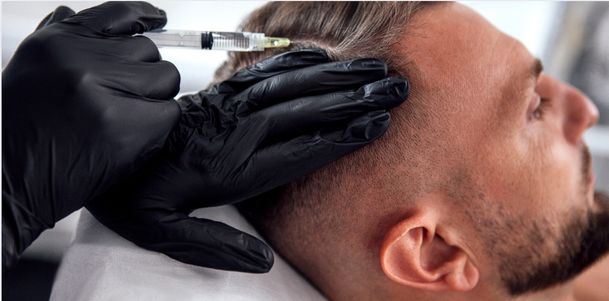
Hair loss treatment without surgery involves noninvasive techniques that will assist in decreasing hair loss as well as making the hair stronger. These are treatments that are appropriate for patients who have early or moderate hair thinning. These might be topical or oral medications, along with the use of platelet-rich plasma therapy and lifestyle changes (nutrition and stress). These medications aim at promoting hair roots and the health of the scalp.
The results will normally show after a few months, and these follow-up sessions will have to be regular. The nonsurgical procedures have less medication and fewer risks than surgery. They are often recommended for people who are not ready for a transplant or want to slow down hair loss naturally. A hair specialist can suggest the best plan based on individual needs.
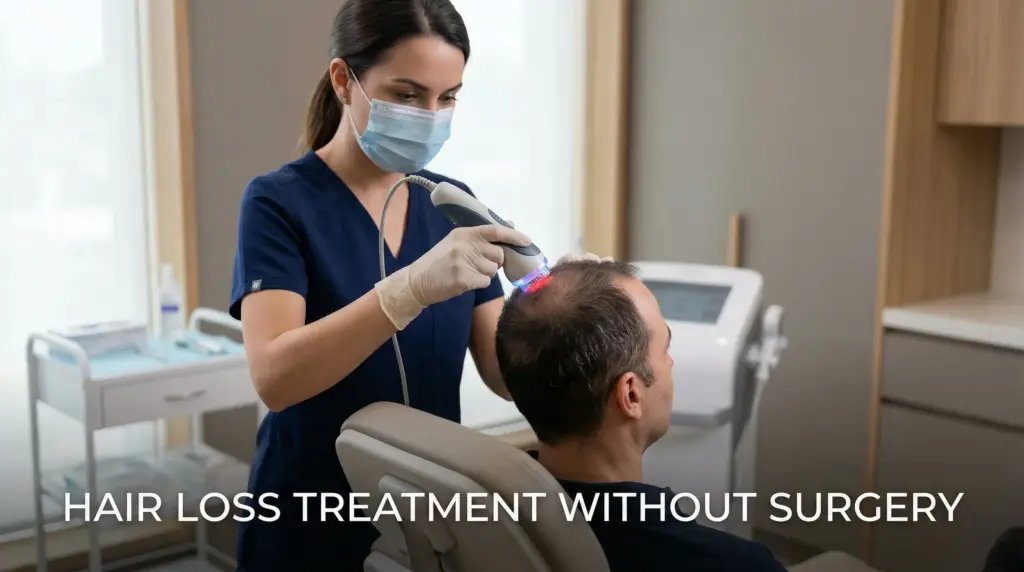
Popular Hair Loss Treatment Without Surgery
Nonsurgical methods of hair loss indeed allow the slowing down of hair thinning and aid in regrowth without transplantation. These can be employed in cases of early or middle loss of hair, and most of the time, they can be effective when used regularly and with appropriate directions.
- PRP Hair Treatment for Hair Loss: PRP uses concentrated growth factors from your own blood, injected into the scalp to stimulate follicles. It may reduce shedding and improve hair thickness over time. Multiple sessions are usually recommended.
- Medicines for Hair Loss Treatment: Medical interventions aid in the management of the causes of hair thinning, particularly the hormonal factors. When taken regularly under medical prescription, they can retard loss of hair and aid in regrowth.
- Minoxidil for Hair Regrowth: Minoxidil is a topical paste that is applied to the head to enhance blood circulation and follicular activity. It has the ability to stop hair loss and stimulate new growth through frequent long-term use.
- Finasteride for Hair Loss: Finasteride is a medication in pill form that lowers the levels of DHT, the hormone that is associated with pattern hair loss. It helps prevent further thinning and may support regrowth in some people.
- Laser Therapy for Hair Growth: Low-level laser therapy is an alternative and consists of therapy with light energy to stimulate the follicles and improve the circulation of the scalp. It is pain-free and may also cause hair growth with repeated application.
- Hair Growth Serums and Topical Solutions: These are the products that contain nutrients, peptides, or extracts of plants that promote the well-being of the scalp. They can help strengthen hair and improve hair texture, but results are usually slow and moderate.
Natural and Lifestyle Solutions For Hair Loss
Natural and lifestyle products contribute to the improvement of hair well-being by improving the condition of the scalp, nutrition, and the overall body balance. They are not invasive procedures and can be implemented to postpone the effects of hair loss and eventually help in making healthier hair in the long term.
- Homeopathic Solutions to Hair Loss: Natural oils, herbal extracts, and scalp massage are simple solutions that can help to enhance blood circulation and feed hair roots. They can assist in the health of the scalp, but their effects are usually slow and less dramatic.
- Diet to Grow Hair: A protein-rich diet full of iron, zinc, and fat is good for the growth of hair. The foods that encourage hair growth internally are eggs, nuts, greens, seeds, etc.
- Hair Loss Vitamins and Supplements: The supplements may include biotin, iron, vitamin D, and omega fatty acids, which may help in the event of deficiency. In the proper quantity, they enable the way the follicles get the job done and also make the hair stronger.
- Connection between Stress and Hair Loss: Stress that is long-term in nature is able to induce the hair to reach the shedding stage, thus leading to significant hair loss. The ways of dealing with stress that stabilize the hair growth cycles include sleep, relaxation, and frequent activity, to name a few.
FAQs
Q: Can natural remedies really help hair loss?
A: Natural remedies can support scalp health and improve hair strength, especially in early thinning. They are slow-acting and are generally gentle compared to medical medications.
Q: Which foods are best for hair growth?
A: Protein-rich foods, leafy greens, nuts, seeds, and iron-rich foods aid in providing nutrients to hair follicles. A healthy diet helps you to maintain healthy hair.
Q: Do vitamins stop hair loss?
A: In case hair loss is caused by a lack of nutrients, vitamins can help. They support follicle function but may not stop genetic hair loss alone.
Q: Can stress cause hair fall?
A: Yes, ongoing stress can disrupt the hair growth cycle and increase shedding. This form of hair fall can be minimized by stress management.
Q: How long do natural treatments take to show results?
A: Natural and lifestyle methods usually take a few months to show visible improvement. Stability is valuable to incremental outcomes.
Q: Can lifestyle changes regrow lost hair?
A: Primary support of follicles and slow thinning is the use of lifestyle changes. In places where the follicles are not active, they may fail to regrow hair.