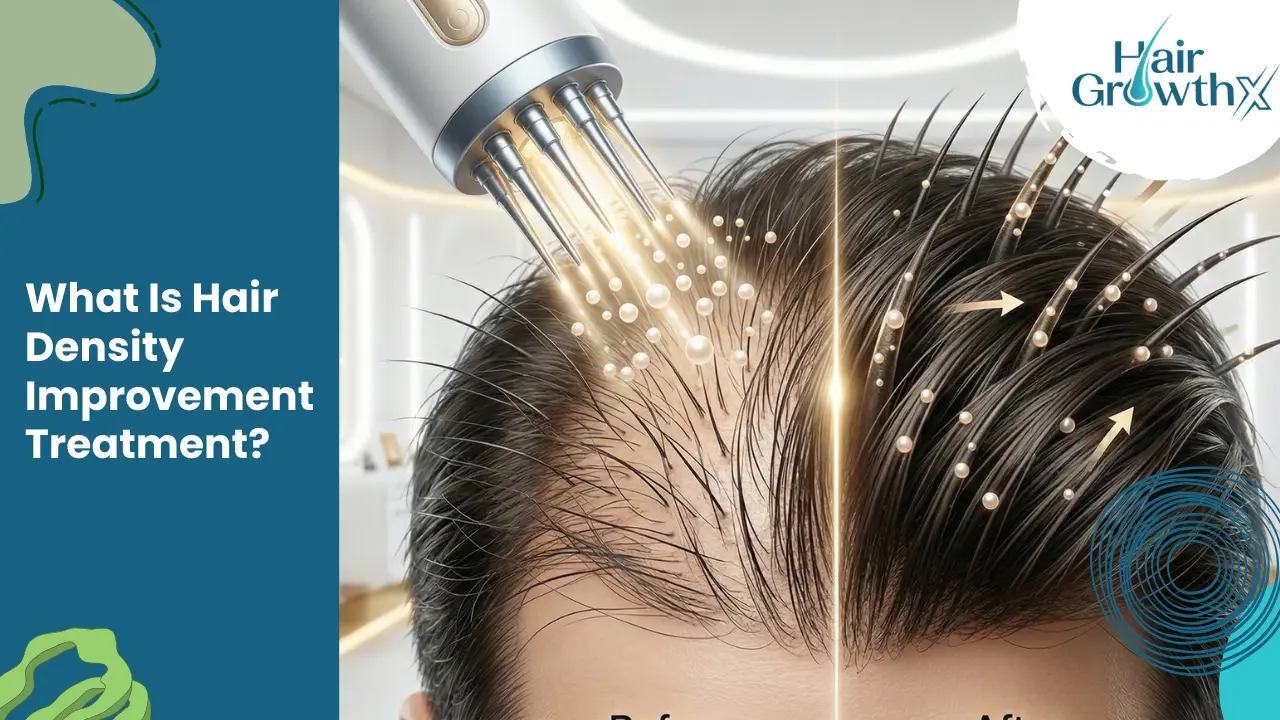
Hair density improvement treatment is aimed at enhancing the appearance of existing hair to look thicker and fuller. This treatment does not generate new follicles; instead, it reinforces existing hair strands and enhances their growth cycle. The alternatives can involve PRP therapy, growth-boosting solutions, laser therapy, and nutritional support. Hair gets healthier and stronger by enhancing the circulation of the scalp and the follicles. This results in improved volume and visibility. The results take time to develop and must be accompanied by frequent sessions to sustain thickness. This therapy applies to individuals with thinning hair and who still have active follicles. This treatment is suitable for people who have thinning hair but still have active follicles. It helps enhance overall appearance without surgery and supports long-term scalp health with proper care and guidance.
Hair Density Improvement Treatment Options
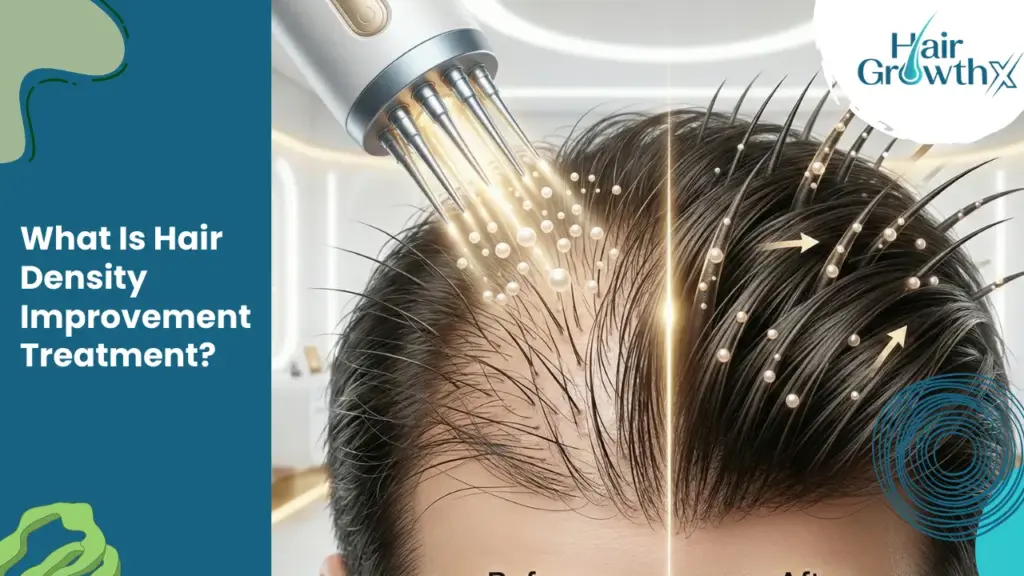
Hair density improvement methods are designed to make hair appear fuller by reinforcing those that are already present or by multiplying the growing hairs. Some techniques promote the growth of follicles and techniques that enhance density through the growth of new hair. The correct choice will be based on the extent of thinning.
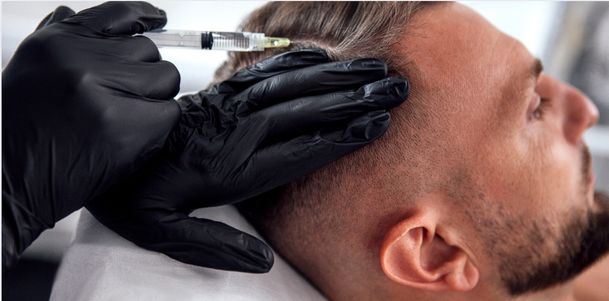
- PRP for Hair Density Improvement: PRP injections deliver growth factors to the scalp, which can stimulate follicles and improve hair thickness. Over multiple sessions, hair may appear denser and healthier.
- Laser Hair Therapy for Hair Thickness: Low-level laser light stimulates follicles and improves circulation around hair roots. This could assist in making it thicker and adding more fullness as it is used frequently.
- Medicines to Improve Hair Density: Medical treatments can slow thinning and support stronger regrowth in active follicles. They help maintain and gradually improve hair density over time.
- Hair Growth Serums for Thicker Hair: Topical serums with peptides or nutrients support scalp health and strengthen hair fibers. They may improve hair texture and reduce breakage, making hair look fuller.
- DHI for Hair Density Improvement: DHI transplant places new follicles directly into thinning areas to increase hair count. They assist in preserving the hair density and eventually enhance it.
What Causes Low Hair Density
The reduction in hair density normally occurs when the follicles of the hair shrink, weaken, or cease to produce thick hair. This may be attributed to genetic hair loss, hormonal influence such as DHT, aging, or continuous loss of hair. Such factors as poor nutrition, stress, issues with the scalp, and medical disorders can also influence the state of follicles.
- Genetic hair thinning: The hair follicles are hereditary and become sensitive and hence become smaller with time, thus losing count.
- Hormonal imbalance: Hormones like DHT can weaken follicles and shorten the hair growth cycle.
- Aging process: As a person gets older, the follicles get inactive and give birth to finer and thinner hair.
- Nutritional deficiency: Lack of proteins, iron, or vitamins may result in weakened growth of hair, as well as decrease the density of hair.
- Chronic stress: Stress lasting over time may lead to hair moving into the shedding phase, causing the loss of overall volume.
- Scalp conditions: Dandruff, inflammation, or infection can disturb follicle health and growth.
- Excessive hair fall or shedding: Conditions like telogen effluvium can reduce density across the scalp.
- Chemical or heat damage: Frequent styling, coloring, or heat can break hair and make it look less dense.
- Medical conditions or illness: Thyroid issues, anemia, or systemic illness can affect hair growth cycles.
Signs of Reduced Hair Density
The thinning of hair is usually manifested by an increased parting, scalp visibility, and loss of root quantity. The hair can be thinner, shedding more, and having a smaller thickness of the ponytail. Some areas can also look uneven or less full over time.
- Wider hair parting: The scalp becomes more visible along the natural part line.
- Scalp visibility under light: The total bulk of the combed hair is now smaller.
- Thinner ponytail or braid: The overall thickness of gathered hair feels smaller than before.
- Less volume at the roots: More hair is observed on pillows, in brushes, or during washing.
- Increased hair fall: More strands are noticed on pillows, brushes, or during washing.
- Finer hair strands: Individual hairs feel thinner and softer than before.
- Slow regrowth after shedding: Hair takes longer to grow back in areas that have thinned.
- Patchy or uneven thickness: Some areas look less dense compared to the surrounding hair.
FAQs
What is hair density improvement treatment?
It is the treatments that enhance the appearance of the hair to be fuller by adding most of the thickness or hair growth.
How does hair density treatment work?
It strengthens existing follicles or adds new hair to improve overall scalp coverage.
Who needs hair density improvement treatment?
People with thinning hair or reduced fullness but still active follicles can benefit.
Does hair density treatment regrow hair?
There are those that enlarge the existing hair strands, but others, such as transplants, provide new strands.
How long does it take to improve hair density?
Apparent modification tends to become evident within a number of months through regular treatment.
Is hair density improvement permanent?
Results can last, but maintenance may be needed to protect natural hair over time.