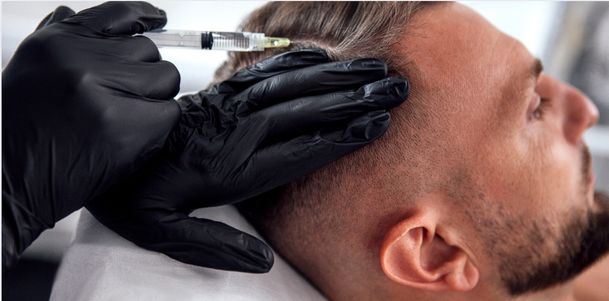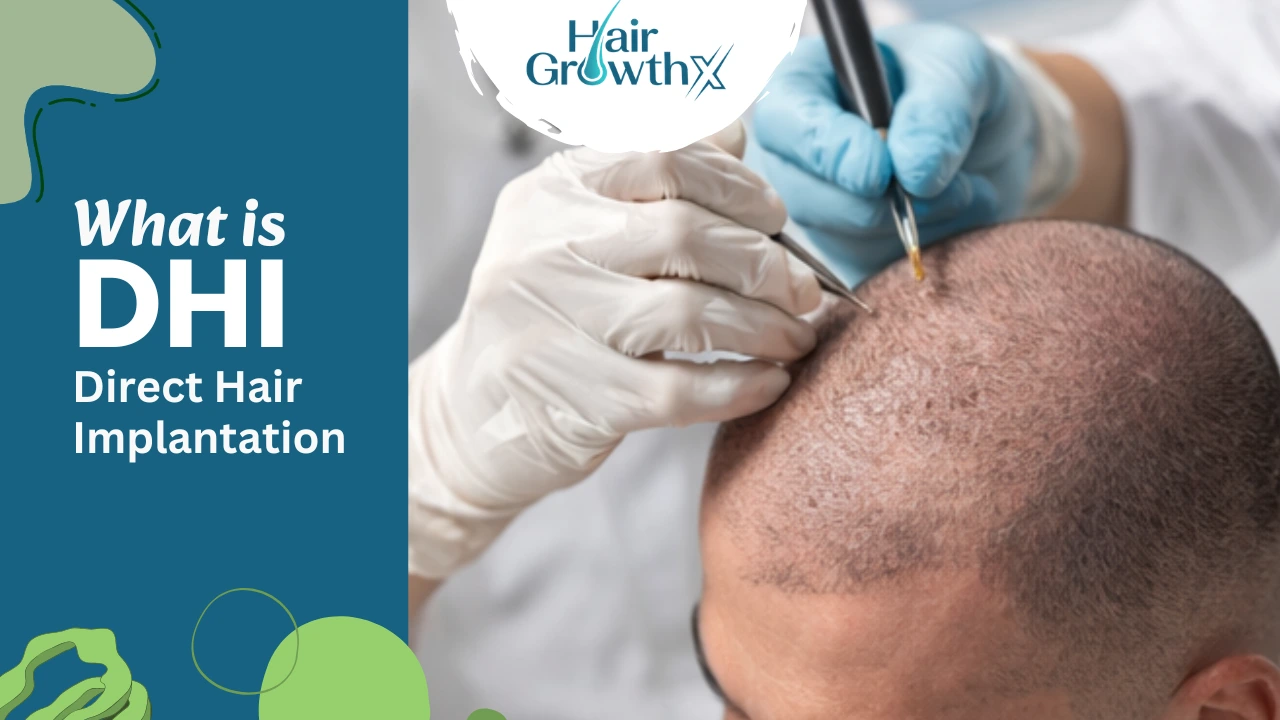
DHI hair transplant is a more progressive technique of hair replacement that is abbreviated as Direct Hair Implantation. In this method, it removes hair follicles singly in the donor region, which is typically the back of the head, just like in FUE. The primary distinction is the step of implantation. A Choi implanter pen is a special tool that is employed to insert the follicles into the scalp. The surgeon is able to better shape the depth, angle, and direction of every hair with DHI. This assists in forming a natural-appearing hairline and increased density. It is performed under local anesthesia, and the recovery is usually fast. In several months, the new hair that is transplanted starts to grow slowly, and it mixes with your own hair
How DHI Hair Transplant Works
Step 1. Consultation and Hairline Design
The physician examines your head and hears out your desire. A hairline would be done with attention to make it fit your face, and it would come naturally after some time
Step 2. Preparing the Donor Area
The local anesthesia and trimming of the back of the scalp are done. This makes you relaxed throughout the process.
Step 3. Extracting Hair Follicles
Individual hair follicles are removed one by one from the donor area, usually using a fine punch tool.
Step 4. Loading the Implanter Pen
Every follicle is inserted into a special Choi implanter pen. It can be placed directly, and no prior separate cuts are required.
Step 5. Direct Implantation
The surgeon is able to place the pen in the scalp and implant the follicle at the right angle and depth with a single move.
Step 6. Healing and Growth
The scalp heals within days. The new growth of hair starts after several months and continues to be better with time.
Key Benefits of DHI Hair Transplant
- Precise implantation: DHI gives the surgeon the opportunity to regulate the angle, depth, and direction of each hair follicle. This assists in producing an extremely natural hairline.
- No separate channel creation: Hair follicles are planted directly with the help of a special pen; therefore, no incision must be made first. This provides more control in the process.
- Less bleeding and minimal trauma: The implantation is direct and precise, which results in the least disturbance of the scalp.
- Faster healing: Many people notice that recovery feels smooth, with redness settling in a short time.
- Higher density placement: DHI can enable more proximity of grafts, which can result in the enhancement of overall thickness.
- Suitable for hairline correction: It is commonly used on very fine work, particularly on the front hairline.
- Natural-looking results: When done in the right way, the new hair will integrate effectively with other hair.
Recovery and Growth Timeline DHI Hair Transplant
- Day 1 to 3: Within the area where the procedure has been done, you might have very slight redness as well as a few scabs. Slight swelling of the forehead may occur for a day or two. The head can be tender, although the pain is not very serious.
- Day 4 to 7: Scabs begin to dry and fall off gently during washing. Redness slowly fades. A substantial number of individuals are at ease going back to work in the offices during this time.
- Week 2: Scalp appears to be more stable. The area where the donation was made heals fast with or without noticeable scars.
- Weeks 3 to 4: There is a possibility of shedding the hairs that have been transplanted. This is natural and is expected. The roots are not destroyed by nature when hidden under the skin.
- Months 3 to 4: New hair growth begins. At the beginning, it may seem to be thin and soft.
- Months 6 to 9: Hair becomes thicker and more noticeable. Density improves gradually.
- Month 12: The outcome is typically seen, and natural-looking and long-term growth is realized.
FAQs
Q: What is a DHI hair transplant?
A: DHI is a hair transplant procedure in which the hair follicles are removed individually and inserted directly into the head with the help of a special implantation pen. It also permits a more accurate positioning.
Q: How is DHI different from FUE?
A: The grafts are immediately implanted in DHI, without prior separate cuts being made. This gives better control over angle and depth during placement.
Q: Is DHI painful?
A: It is done under local anesthesia; hence, you are comfortable. Light pain or muscle spasms can be experienced in a few days.
Q: How long does DHI recovery take?
A: The time required before healing is approximately 7 to 10 days. The results of full hair growth may require 12 months.
Q: Are DHI results permanent?
A: Yes, as a rule, the transplanted hair is permanent since it is taken from parts that do not fall off easily.