
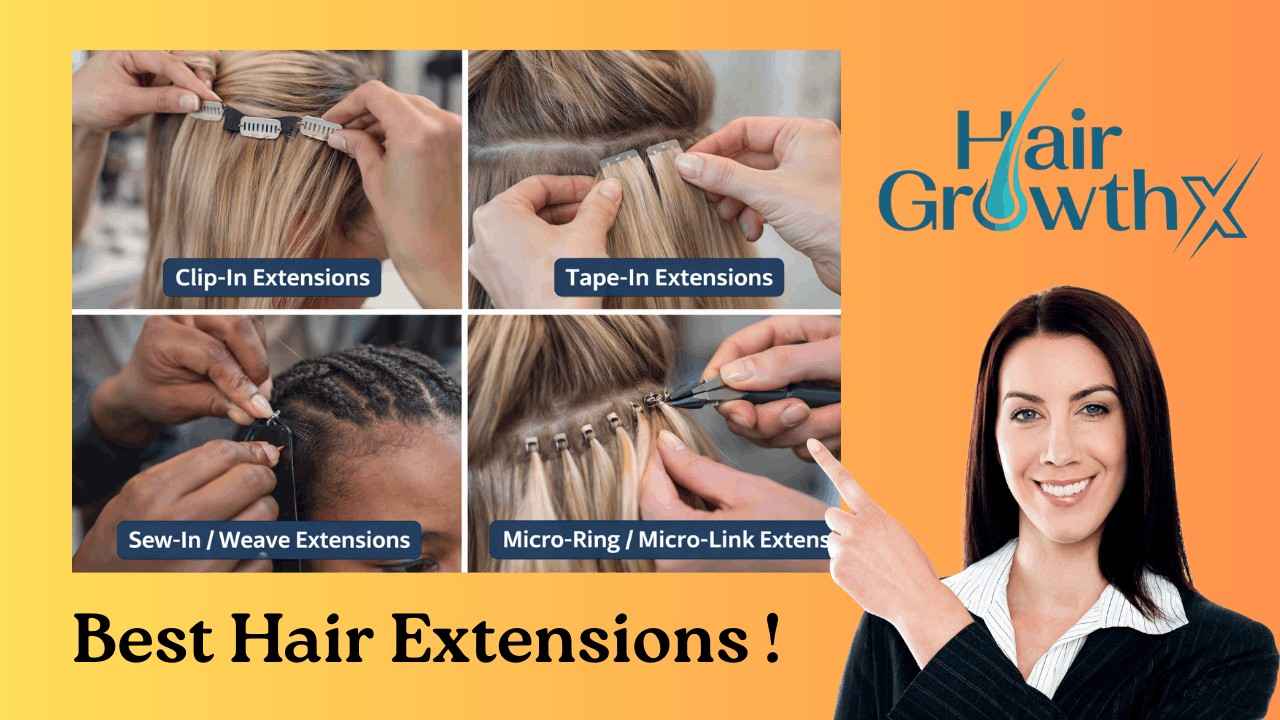
Type of Hair Extensions – So, you are thinking about changing your look. Maybe for a wedding, a party, or maybe you are just bored seeing the same looks every day. That feeling is normal. Natural hair extensions can change everything about your hair. More length, more volume, and that soft movement people notice without knowing why.
But here is the small catch. There is no single extension that works for everyone. You will hear names like clip-ins, tape-ins, sew-ins, micro-links, and keratin bonds, and it is more confusing.
Let’s break down the different types of hair extensions, who they suit best, and what you should consider before making your pick.
First, why do you need hair extensions?
Before choosing any type, ask yourself one thing. How do you want to use them?
- Quick change: For a party, wedding, or travel, temporary extensions make more sense. You don’t need to spend a fortune on permanent methods. You don’t need to spend a fortune on permanent methods.
- Daily wear: If you want long hair every day and don’t want to wait years, semi-permanent or permanent extensions might be best for you.
- Color experiment: Want highlights without bleach? Natural extensions can give you that, too.
Types of Hair Extensions
1. Clip-in Extension
Clip-in hair extension options are the easiest place to start. You clip them in, and you clip them out. No salon visit, no long commitment. That’s why many beginners and people using kinds of extensions for the first time feel comfortable with this method.
They are good for men and women who want instant volume or length for a function or a short outing. With proper care, clip-ins last long and do not pull or harm your natural hair. In most cases, they also work well with light women’s wig styling or partial coverage looks.
2. Tape-In Extensions
Tape-ins are a popular hair extension choice when you want something natural but not fully permanent. They use medical-grade adhesive and sit flat on the scalp, so they feel light and look smooth. These extensions usually last 6 to 8 weeks before adjustment.
They need professional fitting and gentle handling, especially while washing. For people who don’t want daily removal like clip-ins, tape-ins offer a balanced option. Many men with thinning hair also combine them with male wigs for baldness solutions for better blending.
If you want something that feels light, natural, and low-maintenance, tape-ins might be your match. Visit the on Hairgrowthx.
3. Sew-In (Weave) Extensions
Sew-in extensions are one of the oldest and strongest kinds of extensions. Your natural hair is braided, and the extensions are stitched into those braids. This works best for thick or coarse hair that can handle tension.
They last for months and are very secure, but installation takes time and can feel heavy for some. While this method is most used by women, some men’s wig base systems also follow a similar weaving technique for durability.
4. Micro-Link (I-Tip) Extensions
Micro link extensions attach small strands using tiny beads. There is no glue and no heat, which many people prefer. This hair extension method blends well and gives a very natural finish, especially for medium to thick hair.
They do need regular maintenance, and if not installed properly, they can slip. Men with partial baldness sometimes use micro-links along with wigs for bald guys to create a seamless hairline.
5. Keratin Bond (Fusion) Extensions
Keratin bond extensions are considered a premium option. Individual strands are fused using heat and keratin, allowing the hair to move naturally. They last around 3 to 4 months and feel very close to real hair.
Installation takes hours, and removal should always be done by a professional. This method is often chosen by women who want long-lasting results and by men using advanced male wigs for baldness systems that require natural blending.
So… which one is best?
Honestly, there is no single best option.
- No commitment? Clip-ins.
- Semi-permanent and easy? Tape-ins.
- Thick hair and strength? Sew-ins.
- Long-lasting and natural look? Micro-links or keratin bonds.
A Few Tips Before You Decide on the Type of Hair Extension
- Always choose 100% human hair. It looks real and lasts longer.
- Think about your lifestyle. Gym, swimming, and travel all matter.
- Never skip a professional consultation.
- Extensions need care. Treat them gently.
Conclusion,
Hair extensions are not just about how you feel when you see yourself in the mirror. It’s more than that. A little more volume, a little more length—sometimes that small change brings back confidence and comfort in your own look. It does not have to be dramatic to feel meaningful.
If you want proper guidance, Hairgrowthx is an often-trusted website for hair extensions, hair growth, hair treatment, and hair loss problems. Having an experienced team matters. It helps you choose what suits your hair and lifestyle, so the result does not just look fine, it feels right too.
FAQs
Q1. Do hair extensions damage natural hair?
No, not when applied and removed correctly. Damage usually comes from the wrong method or poor care.
Q2. How long do hair extensions last?
Clip-ins can last years. Tape-ins last 6 to 8 weeks. Keratin and micro-links last around 3 to 4 months.
Q3. Can I wash my hair with extensions?
Yes, gently. Use sulfate-free shampoo and avoid rough rubbing.
Q4. Are synthetic extensions worth it?
They are cheaper, but they don’t look as natural and can’t handle heat well.
Q5. How do I choose the right color?
Match the extensions to the ends of your hair, not the roots. A stylist can help with blending.