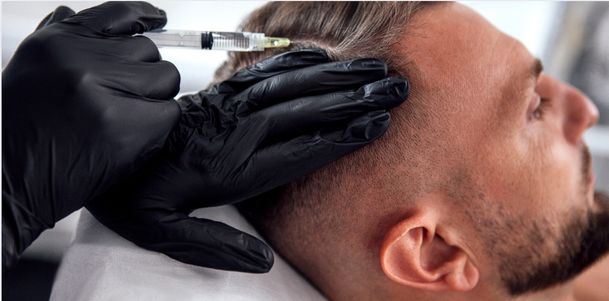
Long-term hair restoration is the procedure that attempts to preserve or regenerate hair development stably and permanently. It does not just aim at replacing hair that has been lost but also preserving the remaining follicles so that they do not continue to thin with time. Such a method can provide medical treatment, supportive scalp, and hair transplantation, according to the degree of hair loss. This is aimed at developing natural-appearing density that remains serviceable by the person as he/she grows up. Since hair loss is usually progressive, it is essential to make long-term planning to maintain a balance of results and make them consistent. Hair restoration may offer a long-lasting effect on hair volume and hair appearance with proper treatment options and continuous care.
Treatments Used in Long-Term Hair Restoration
Long-term hair restoration involves a multi-treatment approach, which helps to replenish lost hair and safeguard the remaining follicles in the long run. FUE, FUT, or DHI are hair transplantation procedures that are permanent in bald regions. The threatened approaches include medicines, PRP therapy, laser therapy, and topical solutions, which can be used to preserve density and delay additional thinning.
- Hair transplant procedures: Methods like FUE, FUT, or DHI move permanent donor follicles to bald areas for lasting regrowth.
- Medicines for hair loss control: Treatments such as DHT-reducing or growth-supporting medicines help protect existing hair long-term.
- PRP therapy: The patient’s blood growth factors trigger the growth of follicles and promote the growth of healthier and thicker hair.
- Laser hair therapy: Low level of light activates follicles and preserves hair density in the long run.
- Hair growth serums and topical solutions: Nutrient- or peptide-based products support scalp health and strengthen existing strands.
- Scalp care and maintenance treatments: Follicles are kept healthy by regular scalp therapy, and it aids in long-term results.
Benefits of Long-Term Hair Restoration
Long-term hair restoration is based on long-lasting and continuous maintenance of hair growth and hair density instead of providing only a temporary solution. It is a mixture of restoration and protection of the existing hair; hence, the results will be natural as an individual grows.
- Provides lasting hair improvement: This has stable hair growth or hair enhancement that is consistent over a long period of time.
- Maintains natural hair over time: Treatments protect existing follicles and slow further thinning.
- Creates natural-looking density: Hair is restored or strengthened in a way that blends with natural growth patterns.
- Reduces need for repeated major procedures: Corrective surgery may be prevented through proper long-term planning.
- Supports gradual and balanced results: Hair growth is achieved in phases that are in line with aging and loss of hair.
- Improves overall hair health: Ongoing care strengthens follicles and scalp condition.
- Boosts long-term confidence: Constant hair cover ensures that one looks good and feels good long-term.
Long-Term Hair Restoration Timeline
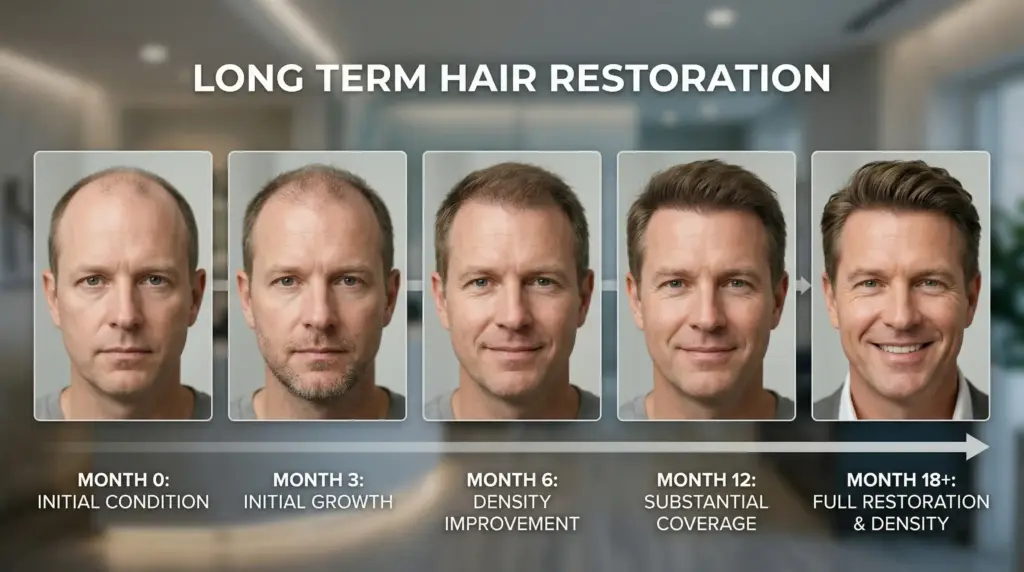
Long-term hair restoration is natural in the growth and restoration of hair. With either a transplant or supportive treatments, the outcomes seem slow and keep on getting better over the course of many months. Stability and maintenance lead to the achievement of consistent and lasting results.
- First 1 to 3 months: Early healing or treatment response occurs. Shedding may reduce, and follicles begin to stabilize.
- 3 to 6 months: First regrowth is in the form of thin new curls or bulking of the existing ones.
- 6 to 12 months: The enhancement in the density and coverage is observable.
- 12 to 18 months: Full transplant growth or maximum treatment effect is usually reached.
- Beyond 18 months: Maintenance treatments help preserve results and protect natural hair long-term.
FAQs
Q: What is long-term hair restoration?
A: It is a method to rejuvenate and perpetually continue hair growth by the use of treatments that give a long-lasting effect.
Q: How is long-term hair restoration different from temporary treatments?
A: It is concerned with long-lasting regrowth and the safeguarding of the current hair, whereas the short-term improvement is provided through temporary methods.
Q: Which treatments are used in long-term hair restoration?
A: A combination of hair transplant, medicines, PRP, laser treatment, and topical treatment is frequent.
Q: Who needs long-term hair restoration?
A: Individuals experiencing progressive loss of hair or those who have lost their hair permanently and desire to have sustained density are the ones who benefit most.
Q: How long do long-term hair restoration results last?
A: Transplantation of hair can be lifelong and supportive treatments can help keep existing hair over the years.
Q: Is maintenance needed after hair restoration?
A: Yes, ongoing care helps protect natural hair and keep overall density stable.